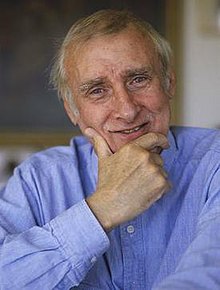
A Spike In The Level Of Nonsense


Image result for spike milligan

Terence Alan Milligan, known as 'Spike' (1918-2002) dedicated his life to making people laugh, through his performances on radio and television, through his poems and memoirs, and often just by being himself. A BBC poll in 1999 voted Spike 'The funniest person of the last 1,000 years.' -That's some accolade. Spike was the chief creator and writer of the famous Goon Show, a British radio comedy programme, performed from 1951 to 1960. The cast also included, Peter Sellers, Harry Secombe and Michael Bentine.

Spike revelled in funny poems. He was influenced by Edward Lear and Lewis Carroll, two famous English poets of the past who also loved extravagant wordplay and nonsensical stories. 
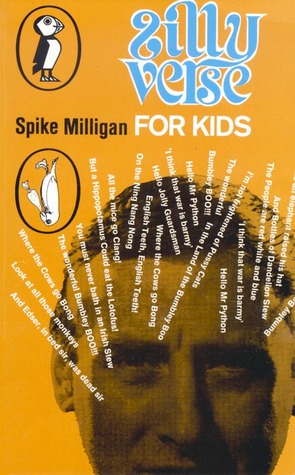
Image result for spike milligan poems book

His verse was considered to be within the genre of literary nonsense. His most famous poem, On the Ning Nang Nong, was voted the UK's favourite comic poem in 1998 in a nationwide poll, ahead of other nonsense poets including Lewis Carroll and Edward Lear. It remains a favourite, and is commonly taught  in primary schools in the UK. This same nonsense verse, set to music, also became a favourite Australia-wide, performed week after week by the ABC children's programme 'Playschool.'

Here are a few of my personal Spike Milligan favourites:


On The Ning Nang Nong
On the Ning Nang Nong 
Where the Cows go Bong! 
and the monkeys all say BOO! 
There's a Nong Nang Ning 
Where the trees go Ping! 
And the tea pots jibber jabber joo. 
On the Nong Ning Nang 
All the mice go Clang 
And you just can't catch 'em when they do! 
So its Ning Nang Nong 
Cows go Bong! 
Nong Nang Ning 
Trees go ping 
Nong Ning Nang 
The mice go Clang 
What a noisy place to belong 
is the Ning Nang Ning Nang Nong!! 
Spike Milligan


Granny
Through every nook and every cranny
The wind blew in on poor old Granny
Around her knees, into each ear
(And up her nose as well, I fear)

All through the night the wind grew worse
It nearly made the vicar curse
The top had fallen off the steeple
Just missing him (and other people)

It blew on man, it blew on beast
It blew on nun, it blew on priest
It blew the wig off Auntie Fanny-
But most of all, it blew on Granny! 
Spike Milligan

Said Hamlet To Ophelia
Said Hamlet to Ophelia,
I'll draw a sketch of thee.
What kind of pencil shall I use?
2B or not 2B?

Image result for Unspun Socks from a Chicken's Laundry


Image result for unspun socks from a chicken's laundry

Comments

  1. These are delightful poems Alan—Edward Lear and Lewis Carroll are favorites of mine, thanks for introducing me to Spike Milligan and his books!

    ReplyDelete
    Replies
    1. They are indeed delightful Michelle. Spike sits easily alongside Lear and Carroll as a great exponent of nonsense verse.

      Delete

Post a Comment

Popular posts from this blog

Poetry Inspired by Images and Objects

There are many ways pictures and photographs can be conscripted to support the writing of poetry. Allow me to share a few ideas with you: Old photographs are a great source of inspiration. Cynthia Rylant explored this idea with great success in her book 'Something Permanent' where she employed the Depression era photographs of Walker Evans to add a new voice to the starkness to the lives of people experienced under extreme circumstances. I have used this strategy to spark many individual poems. In ' I Bet There's No Broccoli On The Moon,' I used a photo I had taken in 2004 while living in New York to inspire a poem. The poem was based on a story related by a friend who grew up in New York.  I regularly combined poetry and pictures in my writer's notebook, drawing on inspiration from the photograph and my personal memories. We can also utilize existing cartoons and illustrations to create ekphrastic poems. I frequently use the illustrations of Jim Pavlidis to co...

Peter Dixon -Teabag Poem

Today I'm highlighting the poetry of Peter Dixon. Peter Dixon was not just a poet. He was a performer, educationalist and artist.   He grew up in London during WW2, and as a boy his schooling was far from successful. He struggled with spelling and the understanding of word, form and grammar, so he tended to write secretly at home, drawing and writing of things largely ignored by schools.   Despite this difficult phase of his life, Peter eventually became a school teacher and then a senior lecturer in education. It often mystified him as to how all of this came to pass. As a teacher, he strived to be unbiased and did not neglect the children who experienced learning challenges.   Peter Dixon became a full time children’s writer and educational consultant. His first book was published in 1978. Whilst living in Winchester, Hampshire, with his family, he   contributed to over 100 poetry anthologies and had seven collections of his own work published including Grow Your O...

Poetry Friday 'Storm On The Island' Seamus Heaney

Given the fact that we recently celebrated St Patrick's Day, it seems appropriate that I take this opportunity to continue the Irish focus and recognize one of Ireland's leading literary figures... Seamus Heaney was born in County Derry in Northern Ireland in 1939 and died in 2013. He became a multi award winning poet. His first collection of poems, 'Death of a Naturalist' appeared in 1966 and helped to establish Heaney as one of the major poets of the 20th century. From that first anthology, I have chosen 'Storm On The Island.' This poem tells us about the stoic resistance of people and structures to an incoming storm. The island is not named. Poetic scholars believe this is a poem that can be taken literally, as a monologue on the life and attitude of island people facing a storm, or it can be understood as a  metaphor of political struggle on the island of Ireland. Heaney knew both worlds.  The poems of this first collection are grounded in the soil...