
MAY DAYS POEMS -'Circus Minimus' May 21


May 21


On his day in  2017, the great era of the circus came to an end when two of America's giant cicus troupes  Ringling Bros. and Barnum & Bailey Circus performed their final show at Nassau Veterans Memorial Coliseum. They had combined in a last ditch effort to stave off the inevitable end. Enormous costs, changing social attitudes and entertainment preferences had all played a part in the downfall of these huge circus organizations. Circus's persist to this day, but they are much smaller, leaner operations and the types of circus acts has also undergone significant change.
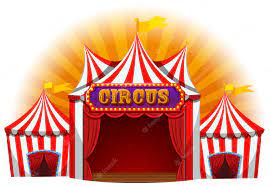


Circus Minimus

When the circus left town for the final time

And the tent was folded away

-The clowns cried

The lion tamer roared his disapproval

The trapeze artist strugglrd to come to grips with the matter

The fire eater contacted an old flame

In search of a little warmth

While the man they called the human cannonball

Left with undue haste

Like a shot from a -

For parts unknown

The jugglers

Couldn’t handle their despair

And all the while

The ringmaster

Walked in endless circles

Intent on being stoic

But still talking in a decidedly loud voice

To anyone who would lend him an ear.

©Alan j Wright

Comments

Popular posts from this blog

Poetry Inspired by Images and Objects

There are many ways pictures and photographs can be conscripted to support the writing of poetry. Allow me to share a few ideas with you: Old photographs are a great source of inspiration. Cynthia Rylant explored this idea with great success in her book 'Something Permanent' where she employed the Depression era photographs of Walker Evans to add a new voice to the starkness to the lives of people experienced under extreme circumstances. I have used this strategy to spark many individual poems. In ' I Bet There's No Broccoli On The Moon,' I used a photo I had taken in 2004 while living in New York to inspire a poem. The poem was based on a story related by a friend who grew up in New York.  I regularly combined poetry and pictures in my writer's notebook, drawing on inspiration from the photograph and my personal memories. We can also utilize existing cartoons and illustrations to create ekphrastic poems. I frequently use the illustrations of Jim Pavlidis to co...

Peter Dixon -Teabag Poem

Today I'm highlighting the poetry of Peter Dixon. Peter Dixon was not just a poet. He was a performer, educationalist and artist.   He grew up in London during WW2, and as a boy his schooling was far from successful. He struggled with spelling and the understanding of word, form and grammar, so he tended to write secretly at home, drawing and writing of things largely ignored by schools.   Despite this difficult phase of his life, Peter eventually became a school teacher and then a senior lecturer in education. It often mystified him as to how all of this came to pass. As a teacher, he strived to be unbiased and did not neglect the children who experienced learning challenges.   Peter Dixon became a full time children’s writer and educational consultant. His first book was published in 1978. Whilst living in Winchester, Hampshire, with his family, he   contributed to over 100 poetry anthologies and had seven collections of his own work published including Grow Your O...

Poetry Friday 'Storm On The Island' Seamus Heaney

Given the fact that we recently celebrated St Patrick's Day, it seems appropriate that I take this opportunity to continue the Irish focus and recognize one of Ireland's leading literary figures... Seamus Heaney was born in County Derry in Northern Ireland in 1939 and died in 2013. He became a multi award winning poet. His first collection of poems, 'Death of a Naturalist' appeared in 1966 and helped to establish Heaney as one of the major poets of the 20th century. From that first anthology, I have chosen 'Storm On The Island.' This poem tells us about the stoic resistance of people and structures to an incoming storm. The island is not named. Poetic scholars believe this is a poem that can be taken literally, as a monologue on the life and attitude of island people facing a storm, or it can be understood as a  metaphor of political struggle on the island of Ireland. Heaney knew both worlds.  The poems of this first collection are grounded in the soil...